Microcurrent Electro-Acupuncture

What is Microcurrent Electro-Acupuncture?
Microcurrent Electro-Acupuncture uses very low-level electrical stimulation as part of a broader pain, recovery, and wellness support plan.
At ProTouch Rehabilitation in Deerfield, IL, Dr. Spencer may discuss microcurrent therapy for patients looking for gentle support with pain, mobility, nerve-related symptoms, tissue recovery, or whole-body function.
The goal is not to treat one symptom in isolation. ProTouch considers structure, movement, recovery, nutrition, and the nervous system when deciding whether this therapy fits the care plan.
How Microcurrent Therapy Works
Microcurrent therapy uses subtle electrical current that is much lower than many traditional stimulation devices. It is commonly discussed in relation to cellular activity, tissue recovery, pain signaling, and nervous system response.
The electro-acupuncture approach applies this low-level current to targeted areas. The goal is to support the body’s response without overwhelming sensitive tissue.
Microcurrent therapy may support comfort and recovery, but it should not be presented as a guaranteed cure or a replacement for appropriate medical care.
Why Patients Ask About Microcurrent
Patients often ask about microcurrent therapy when they want a gentle, non-surgical support option that can fit into a broader rehabilitation or wellness plan.
Pain Support
Microcurrent therapy may be discussed when discomfort, sensitivity, or recurring pain patterns affect movement or daily function.
Nerve-Related Symptoms
Some patients ask about microcurrent when symptoms feel nerve-related, such as tingling, irritation, sensitivity, or unusual discomfort patterns.
Tissue Recovery
Low-level stimulation may be used as part of a recovery plan involving soft tissue, mobility, and local tissue response.
Whole-Body Context
ProTouch may pair microcurrent with structural correction, muscle activation, nutrition, detox support, or other services when appropriate.
Additional Microcurrent Applications
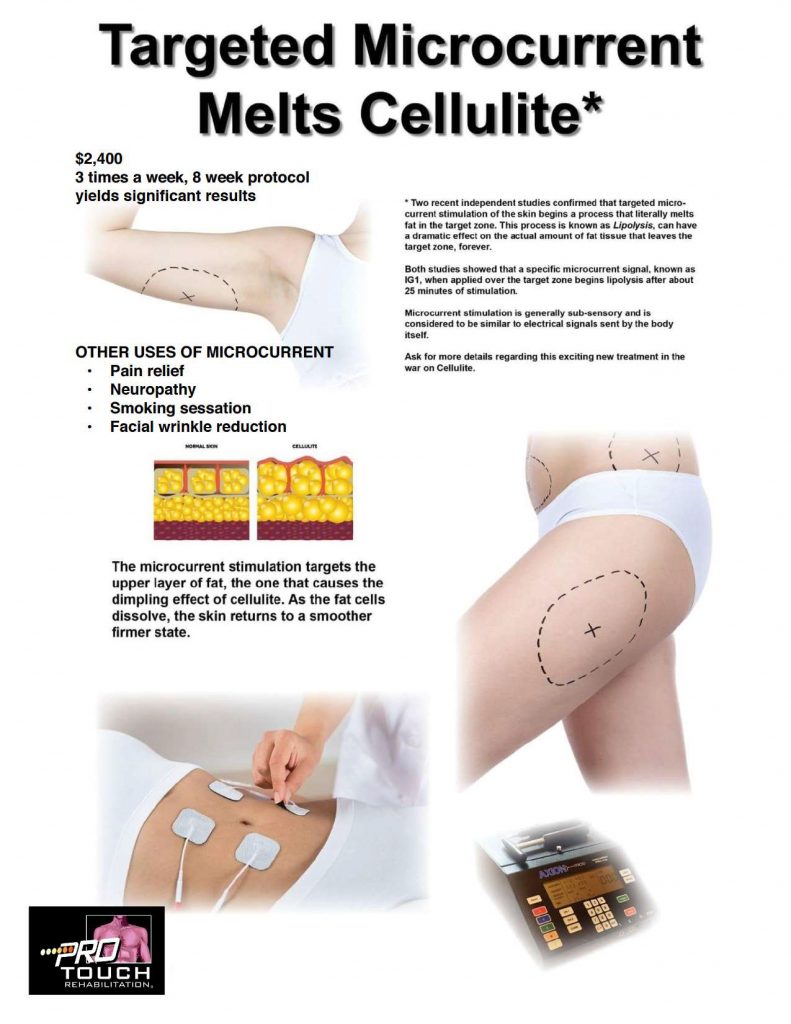
The original ProTouch page includes this educational graphic to show additional ways microcurrent has been discussed in the practice. We are preserving it as part of the doctor’s intended page content while presenting it in a cleaner layout.
Microcurrent Compared With TENS
Many patients are familiar with TENS units. Microcurrent is different because it typically uses much lower current. TENS is commonly used to interrupt or modulate pain signals, while microcurrent is often discussed in relation to tissue response, recovery support, and subtle stimulation.
Dr. Spencer can explain which approach makes sense for your situation and whether microcurrent belongs in your care plan.
How This Fits Into a ProTouch Plan
Microcurrent Electro-Acupuncture may be used by itself, but it often fits best when the broader picture is considered. Structure, muscle activation, shockwave therapy, nutrition, detoxification, hormone support, and recovery habits can all influence how a patient feels.
The best starting point depends on the person, not just the symptom. Dr. Spencer can help decide whether microcurrent therapy makes sense or whether another service should come first.
Microcurrent Electro-Acupuncture: Common Questions
Does Microcurrent Electro-Acupuncture hurt?
Most patients describe the experience as mild and well tolerated. The currents used are very small, and Dr. Spencer can adjust the approach to keep each session comfortable.
How soon might I notice a difference?
Responses vary from person to person. Some patients feel a change after a few sessions, while others need more time. It is usually most helpful as part of a broader plan rather than a single quick fix.
Can it be combined with other care?
Often, yes. This service is frequently used alongside structural work, muscle support, and nutrition. Dr. Spencer will review your history and goals before combining services.
Experience What Real Health Feels Like
Request an appointment with ProTouch Rehabilitation to discuss whether Microcurrent Electro-Acupuncture may be a good fit for your symptoms, recovery goals, and wellness plan.